 DIET & NUTRITION
  PATIENT EDUCATION
  OBESITY/WEIGHT MANAGEMENT
  EXERCISE/TRAINING
  LEGAL MATTERS
  GUIDELINES/RECOMMENDATIONS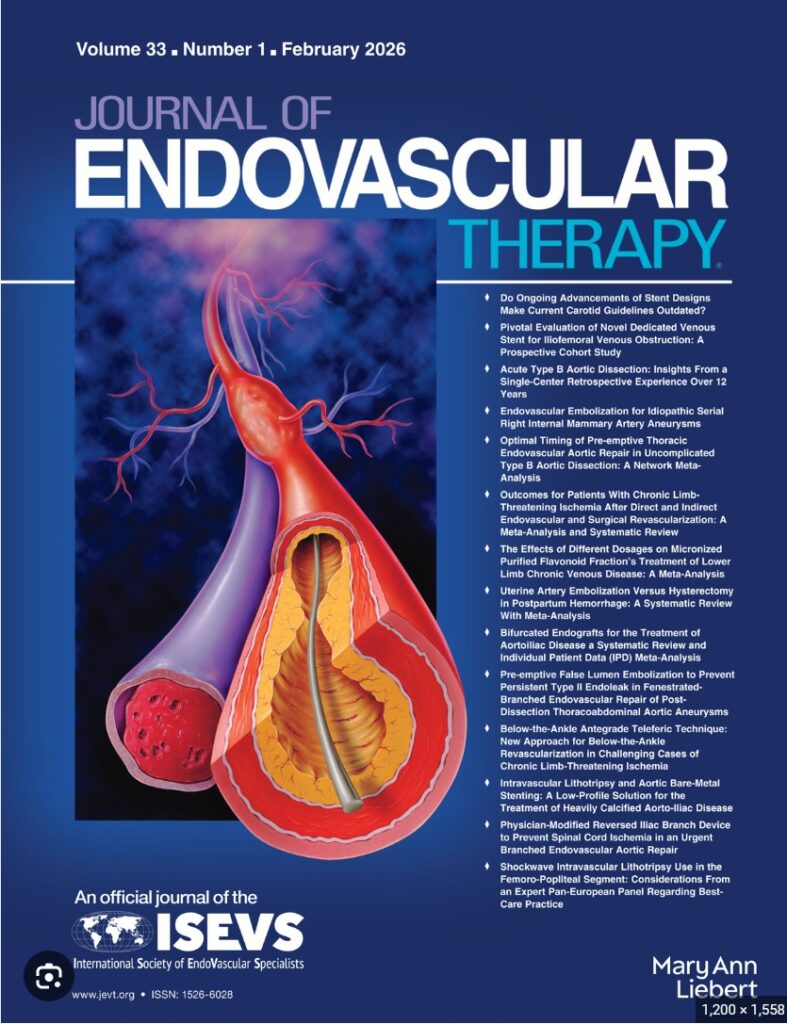
Vascular surgeons successfully modified an iliac limb graft mid-procedure to preserve a critical L5 lumbar artery during emergency thoracoabdominal aortic aneurysm (TAAA) repair. The 59-year-old patient with extent III TAAA (9.8 cm, rapidly expanding from 6.5 cm) underwent fenestrated/branched endovascular repair (F/BEVAR) with custom device modification to maintain spinal perfusion pathways and prevent paraplegia.
⚡ CLINICAL CONSIDERATIONS
- Intraoperative vessel preservation becomes viable option during complex TAAA repair when post-deployment imaging reveals salvageable lumbar arteries amenable to fenestration.
- Physician-modified iliac devices (13×16×39 Z SLE Cook limb with custom lumbar branch) enable on-table adaptation when patient anatomy excludes off-the-shelf solutions and spinal perfusion risk is high.
- Hypogastric artery preservation combined with lumbar fenestration addresses multiple collateral pathways simultaneously, reducing spinal cord ischemia (SCI) risk in high-risk TAAA repairs.
- Zero ischemic complications at one-month follow-up with patent hypogastric and lumbar stents validates feasibility despite technically demanding modification during emergency procedure.
🎯 PRACTICE APPLICATIONS
- Evaluate lumbar artery caliber and location on pre-deployment aortography to identify fenestration candidates before committing to standard repair strategy.
- Stock appropriate iliac limb components (Cook Z SLE series) in TAAA inventory to enable rapid modification when spinal perfusion anatomy warrants salvage.
- Develop institutional protocols for intraoperative decision-making regarding collateral vessel preservation versus expedited repair completion in unstable patients.
- Document lumbar and hypogastric vessel patency at all post-operative intervals to establish long-term durability of modified device configurations.
More in Vascular Medicine
